On this page
If you’re planning a new shower, you’ve probably come across the question: wet room or shower enclosure? Both can look fantastic. Both can be easy to live with. But they suit different rooms, different households and different budgets.
Here’s an honest comparison to help you decide.
What’s the difference?
A shower enclosure is a self-contained unit: a shower tray with glass doors or panels around it. It might be a quadrant tucked into a corner, a rectangular enclosure or a walk-in design with a single fixed glass panel.
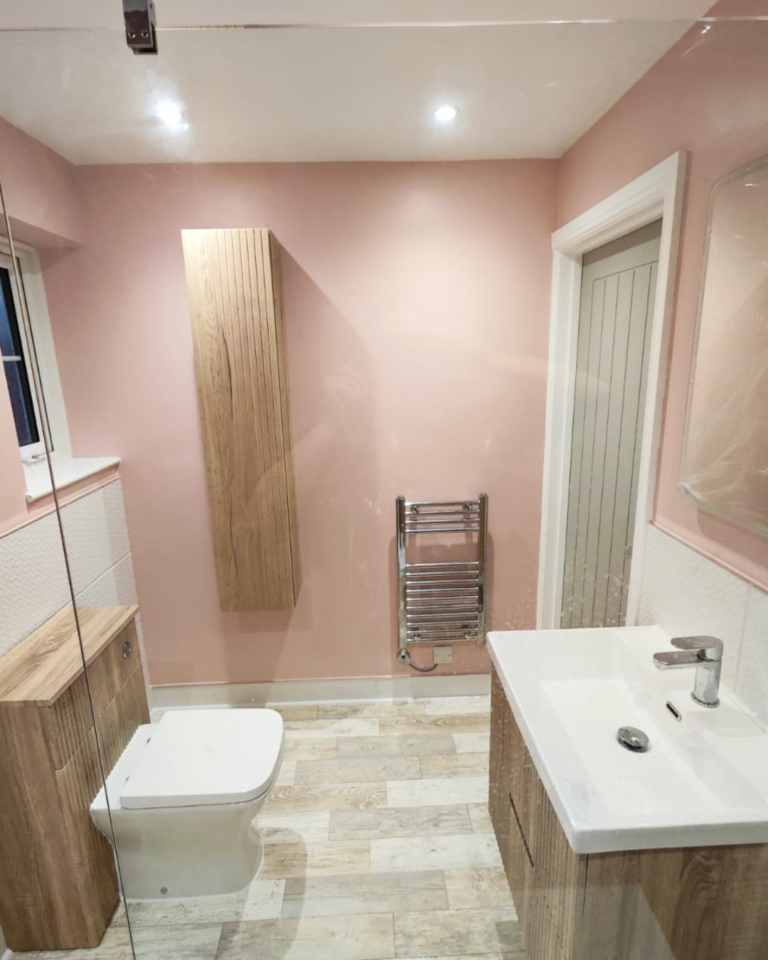
A wet room has no tray at all. The floor is level with the rest of the room and gently slopes towards a drain. The whole room, or at least the showering area, is fully waterproofed. You’ll often see a single glass screen to stop water reaching the toilet and basin.
Somewhere in between is the walk-in shower with a low-profile tray. It gives you most of the look of a wet room, with a tray only a few centimetres high, for less work and cost.

The benefits of a wet room
- Level access. No step at all, which makes it ideal for anyone with mobility problems, and for planning ahead.
- Feels spacious. With no tray edge or bulky frame, even a small room looks bigger.
- Easy to clean. Fewer seals, frames and corners to collect grime.
- Adds appeal. A well-built wet room can be a selling point.
The downsides of a wet room
- Cost. A wet room needs the floor taken up, a sloped former laid, and thorough waterproofing (called tanking). That’s more labour than fitting a tray.
- Splashing. Towels, toilet roll and anything on the floor can get wet unless the room is planned well.
- Construction matters. Timber floors, common upstairs in many Essex homes, need extra work to stay rigid and watertight. Done badly, a wet room can leak into the ceiling below.
The benefits of a shower enclosure
- Lower cost. Usually quicker and cheaper to install.
- Keeps water in. Doors and panels contain the spray.
- Wide choice. Endless sizes and styles to suit almost any room.
- Easy to replace later.
The downsides of a shower enclosure
- A step up. Even a low tray is a small step.
- More to clean. Frames, runners and seals need regular attention.
- Can feel enclosed in a smaller bathroom.
Ventilation: especially important near the coast
Whichever you choose, ventilation matters. Building Regulations set a minimum extraction rate for bathrooms, but in practice we often recommend going further.
That’s particularly true in homes on Mersea Island, around the waterfront at Brightlingsea, and along the river at Wivenhoe. Damp coastal air means bathrooms take longer to dry out after a shower. In a wet room, where more of the room gets wet, a good extractor fan, ideally one with a humidity sensor that switches itself on, makes a real difference to mould and condensation. Holiday homes and lets that stand empty for a week or two at a time need this even more.
Which is right for you?
A wet room is likely to suit you if:
- someone in your home has, or may develop, mobility problems
- you want a sleek, open look and have the budget
- the room is big enough to keep the toilet and basin out of the splash zone.
A shower enclosure or walk-in shower with a low tray is likely to suit you if:
- you want to keep costs down
- the bathroom is small and splashing is a worry
- you’re refreshing the bathroom rather than starting from scratch.
Rough costs
A wet room almost always costs more than a walk-in shower with a low tray in the same space, because of the extra floor work and waterproofing. How much more depends on your floor, your drainage and the size of the room. The simplest way to compare is to have both options priced for your bathroom. We’re happy to do that as part of a free consultation.
Showers and wet rooms around Colchester
We fit both across Colchester and the surrounding coast, from older terraces in the town to bungalows and holiday homes on the islands and estuaries. We’ll look at your floor, your drainage and how you actually use the room before recommending one or the other.
Bathroom fitting near you
Frequently asked questions
Can you have a wet room upstairs?
Yes, but the floor needs strengthening and waterproofing properly. We’ll check the joists before recommending it.
Does a wet room add value to a house?
It can, especially in bungalows and homes likely to appeal to older buyers. But it’s best to choose what suits you, rather than guessing what a future buyer might want.
Can I turn my bath into a walk-in shower?
Usually, yes. See our guide to replacing a bath with a walk-in shower.
Let’s talk about your shower
Call us on 01621 503579 or get in touch for a free consultation. We’ll tell you honestly which option suits your home. You can also read more about our bathroom installations.