On this page
On 3 August, Essex & Suffolk Water brought in its first hosepipe ban since 1997. Anglian Water and Affinity Water, which supply other parts of Essex, already had bans in place. At the time of writing, the bans are still in force, and Essex & Suffolk Water has said that reservoirs typically recover over the autumn and winter. If you spent August watching the lawn turn the colour of a digestive biscuit, you’re not alone.
Most of the attention went on gardens and paddling pools. But the room that uses the most water in your home is the bathroom. Between the toilet, the shower and the bath, it accounts for well over half of what most households use.
The good news is that a bathroom can use a lot less water without feeling any less comfortable. Some of the changes cost next to nothing. Others are worth building in when you’re replacing your bathroom anyway.
Start with the quick fixes
Before you spend a penny on new fittings, check for the things that waste water quietly.
- A dripping or running cistern. Water companies estimate that a leaking toilet can waste up to 400 litres a day. To test yours, put a few drops of food colouring in the cistern and wait 15 minutes without flushing. If the colour shows in the pan, the flush valve or seal needs replacing. It’s usually a small, inexpensive repair.
- Dripping taps. A worn washer or cartridge can drip all day and night. Again, it’s a quick job.
- The shower head. Limescale in the head makes water spray in all directions rather than where you want it, so you end up standing under it for longer. Soaking it in white vinegar overnight helps, or you can swap it for an aerated head.
Showers: where the biggest savings are
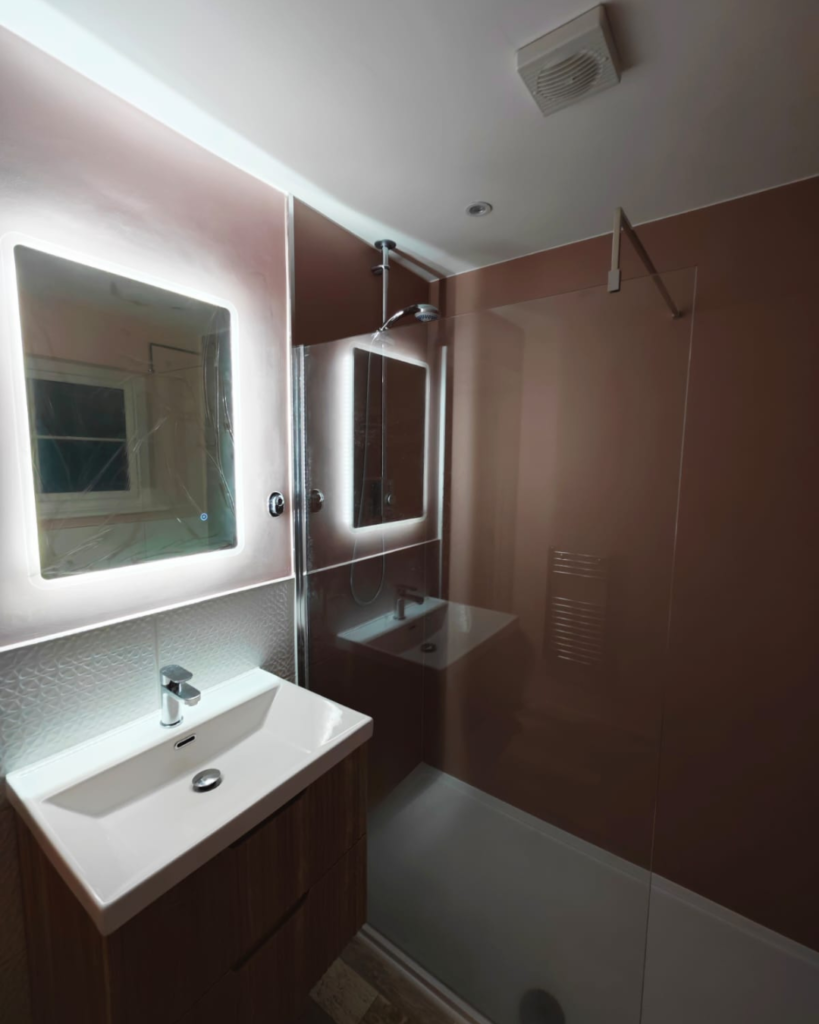
A power shower can use 12 to 15 litres a minute, sometimes more. A good modern shower set up for efficiency typically uses around 8 litres a minute and still feels generous, because aerated heads mix air into the water.
If you’re having a new bathroom fitted, ask your installer about:
- Flow-regulated shower heads that keep the pressure feeling strong while using less water.
- Thermostatic mixers, which reach the right temperature straight away so you’re not running water while you fiddle with the dial.
- Whether you need a pump at all. Many homes with combi boilers or unvented cylinders get perfectly good pressure without one.
Toilets: the second biggest user
Older toilets can use 9 litres or more for every flush. A modern dual-flush toilet typically uses around 4 litres for a full flush and less for a half flush. Over a year, for a family of four, that difference adds up quickly.
If you’re not ready to replace the whole toilet, a cistern displacement bag reduces the water used per flush. Some water companies give them away free, so check your supplier’s website first.
Baths: keep one, but think about the size
We’re not going to tell you to give up your bath. For many families, and anyone with aches and pains, a proper soak matters. But a large or double-ended bath can hold a surprising amount of water, especially when it’s filled to the brim.
If you’re replacing a bath, a well-shaped standard bath often feels just as comfortable while holding less. And if nobody in the house really uses the bath, it might be time to think about a walk-in shower instead. We’ve written a separate guide to replacing a bath with a walk-in shower.
Taps and basins
Basin taps with flow restrictors or aerators can cut water use noticeably without you noticing much difference when you wash your hands. Click-clack waste plugs that are easy to use also make it more likely you’ll fill the basin for a shave rather than leaving the tap running.
If you’re planning a new bathroom anyway
The cheapest time to save water is when the walls are already open. A new bathroom is the right moment to:
- choose a dual-flush toilet and an efficient shower
- fix any slow leaks in the pipework behind the scenes
- move to a thermostatic shower that reaches temperature quickly
- check that your water pressure suits the fittings you’ve chosen, so you’re not disappointed after the tiler has finished.
A good installer will talk you through this without trying to sell you the most expensive option. You can read more about how we approach a new bathroom installation, or about our general plumbing work if it’s just a leak or a running toilet you’re dealing with.
Local to Maldon, Chelmsford and beyond
We’re based in Tolleshunt D’Arcy, just outside Maldon, so the Blackwater villages and the towns around them are very much our home ground. We fit bathrooms and fix leaks across Maldon, Tiptree and Witham, and further afield in Chelmsford and Brentwood.
Wherever you are, it’s worth checking your supplier’s website. Depending on where you live, that will be Essex & Suffolk Water (which supplies much of the county, including Chelmsford), Anglian Water or Affinity Water. Some offer free water-saving gadgets, and all of them have advice on reading your meter and spotting a hidden leak.
Bathroom fitting near you
Frequently asked questions
Will a water-saving shower feel weak?
Not if it’s chosen properly. Modern aerated and flow-regulated heads are designed to feel strong while using less water. The key is matching the shower to your boiler or hot water system, which is something we check before recommending anything.
Is it worth replacing a toilet just to save water?
On its own, probably not, unless the old one is leaking or very inefficient. But if you’re replacing the bathroom anyway, choosing a dual-flush toilet costs little or nothing extra and saves water every day.
Can you fix a running toilet without replacing the bathroom?
Yes. Running cisterns and dripping taps are everyday plumbing jobs, and fixing them is often quick and inexpensive.
Talk to us
Whether it’s a dripping cistern or a full bathroom refit, we’re happy to give honest advice. Call us on 01621 503579 or get in touch online to arrange a free consultation.